

Section 03 · Diagnosing Access Gaps
Method3.1
Select the gap assessments
Select the assessments the study will make of every Priority Area. Each asks one question about the access supply (the infrastructure, services, and environment that carry the connection to the subject), such as whether the walk is comfortable or the service frequent enough. Choose the ones that will help identify the gaps that matter for this subject and its objectives.
An assessment’s evidence is a prompt, not a finding. A low pedestrian environment score, for example, shows where to look closer; the verdict comes from examining that place with other available data and local knowledge.
Flux walkthrough3.1
Select the assessments for this study
Colorado Connector Fort Collins, Colorado · CO Base
Select the assessments
The Gaps stage lists the standard assessments, and any of them can be skipped and brought back later. We kept pedestrian environment, transfer burden, service frequency, and access distance, and skipped service span.
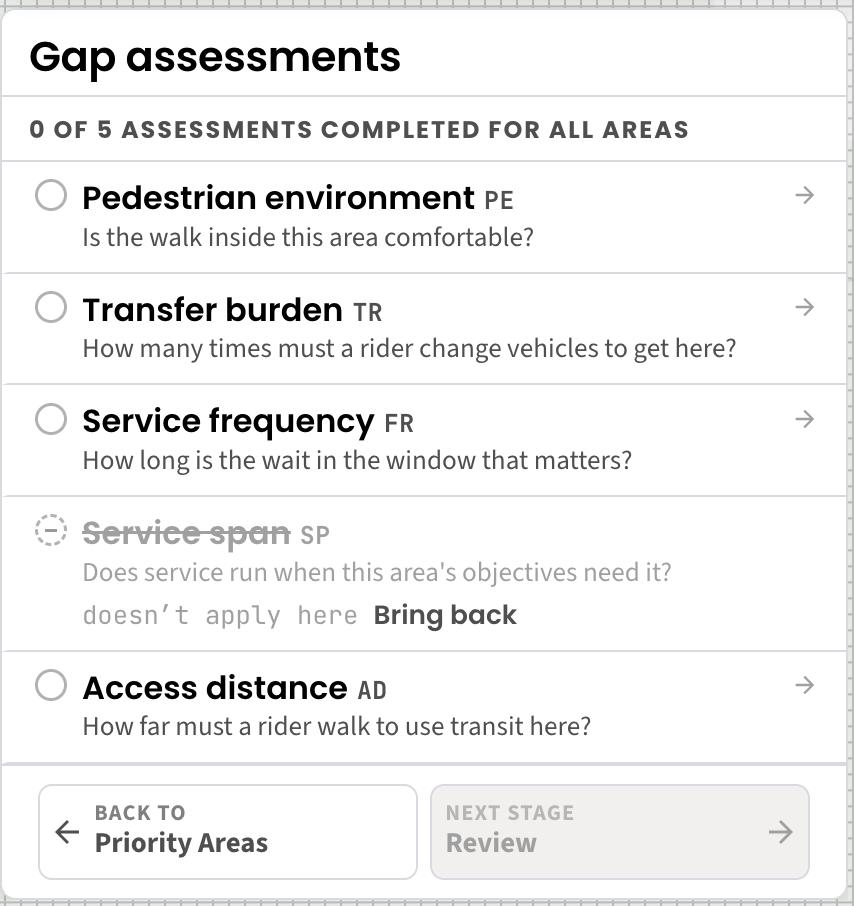
Each assessment is answered for every Priority Area before the next opens.